
Choosing the right cleanroom sandwich panel is crucial when constructing cleanrooms, laboratories, or cold storage facilities.
The main core material types on the market include rock wool sandwich panel, polyurethane (PU), silica rock, and magnesium oxide, each with significant differences in fire resistance and thermal insulation properties, directly impacting the safety and energy efficiency of the project.
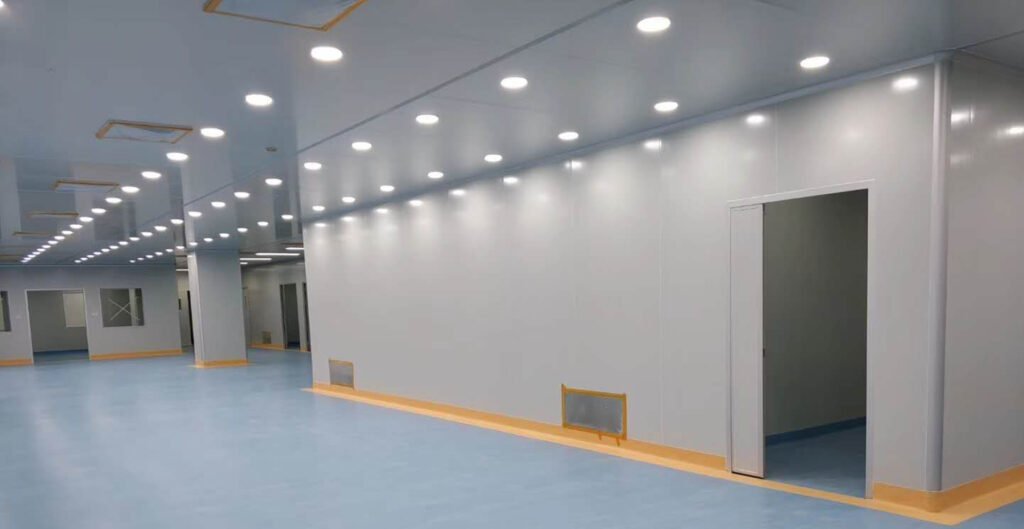
This article will help you make informed decisions among numerous options based on objective parameters and real-world application scenarios.
Comparison of core parameters
A table to understand the key differences in the core materials of cleanroom sandwich panels.
| Comparison Dimensions | Magnesium oxide sandwich panels | Rock wool sandwich panels | polyurethane sandwich panels | Silica Sandwich Panel |
| Fire resistance rating | A2 | A2 | B1 | B1 |
| Thermal conductivity (W/m·K) | Unclear | ≤0.043 | 0.022 | Unclear |
| Core positioning | High strength and moisture resistance, the first choice for cleanliness. | Fire-safe and with excellent sound insulation | Excellent heat retention, lightweight and durable | Emerging materials, a balanced choice |
| Moisture-proof and corrosion-resistant | Excellent (Suitable for hot and humid environments that require frequent disinfection) | Medium (high water absorption rate, moisture affects heat retention) | Excellent (high closed-cell ratio, waterproof and moisture-proof) | Medium (with some weather resistance) |
| Applicable Scenarios | Pharmaceutical sterile areas, medical devices, hospital operating rooms | Electronics, food, and non-sterile pharmaceutical workshops | Cold storage, low-temperature environments, and places with extremely high insulation requirements | Food processing area, electronics workshop, laboratory |
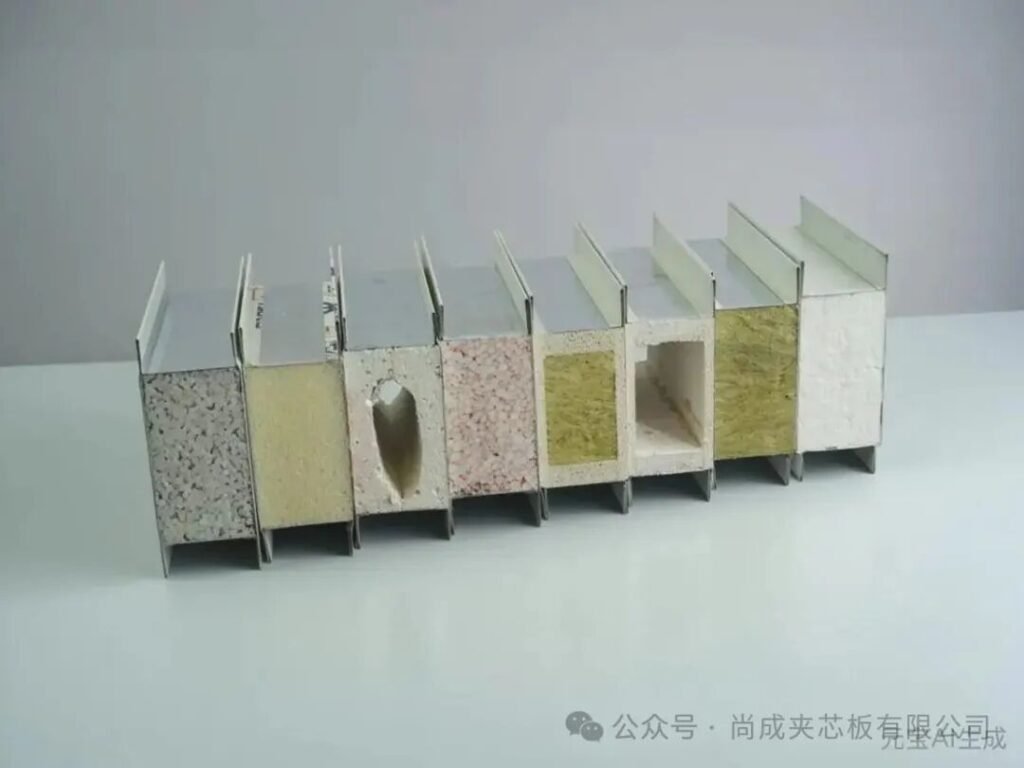
In-depth evaluation and scenario matching
- Rock wool sandwich panels: fire-safe ceilings
Core Advantages: Rock wool core material uses natural basalt as raw material. Its biggest advantage is its Class A non-combustible fire resistance, with a fire resistance time of up to 70 minutes, effectively improving the fire safety level of buildings. It also has excellent sound insulation and sound absorption properties.
Applicable Scenarios: Rock wool boards are an ideal choice for industries with strict fire protection regulations, such as chemical and pharmaceutical industries, as well as low- to medium-level cleanrooms in electronics and food industries.
Main Limitations: The thermal insulation performance of rock wool boards is not as good as polyurethane. In cold regions or situations with extremely high insulation requirements, additional insulation measures may be necessary. Its water absorption rate is relatively high; in humid environments, water-repellent treatment is required, otherwise its insulation performance will decrease.
- Polyurethane (PU) sandwich panels: the hexagonal warrior of the insulation industry
Core Advantages: Polyurethane foam boasts extremely low thermal conductivity, providing exceptional thermal insulation performance, essentially acting as a “temperature-regulating down jacket” for buildings. It also features lightweight construction, high compressive strength, and excellent waterproof and moisture-proof properties.
Applicable Scenarios: Cold storage construction is the most advantageous application area for polyurethane sandwich panels, as it effectively reduces energy consumption and maintains stable low temperatures. It is also widely used in industrial plants and warehouses with high insulation requirements.
Main Limitations: The biggest drawback is its fire resistance, typically Class B (combustible or flammable). Combustion may release toxic gases, making it prohibited in many cleanrooms.
- Silica Sandwich Panels: A Porous Revolution in Air Purification
Core Advantages: Silica rock purification panels are a new type of material with a porous structure, effectively adsorbing harmful substances in the air and exhibiting good weather resistance and corrosion resistance.
Applicable Scenarios: Suitable for locations with high requirements for indoor air quality, such as offices, food processing plants, and electronics workshops.
Main Limitations: As a relatively new material, its performance parameters and long-term stability require further verification through more practical engineering cases. Customization costs may be relatively high.
- Magnesium oxide sandwich panels: the first choice for high-cleanliness environments.
Core Advantages: Shangcheng’s handcrafted magnesium oxide boards use a magnesium oxide mesh core material, achieving the same Class A fire resistance standard. They also exhibit excellent performance in moisture resistance and strength, are not easily deformed, and do not breed mold, making them particularly suitable for humid and hot environments. The handcrafted process allows for a high degree of customization and airtightness, while the surrounding metal frame enhances overall rigidity and compressive strength.
Applicable Scenarios: They are the preferred choice for high-level, high-hygiene clean environments such as pharmaceutical sterile areas, medical device installations, hospital operating rooms, and laboratories. Their high degree of customization and convenient installation make them particularly suitable for complex beam-column structures and irregularly shaped spaces in renovation projects.
Unique Brand Value: Shangcheng owns a 18,722㎡ factory, supporting full-category customization services. Its products are solidly manufactured, heavy, and thick, and feature triple anti-counterfeiting marks. Their quality stability and reputation are recognized in the international market, with exports to over 60 countries and regions.
Final Purchase Recommendations
The choice of which handmade purification panel to use depends entirely on your specific needs, application scenarios, and budget considerations.
- If fire safety is the top priority: for example, in chemical, pharmaceutical, or densely populated areas, rock wool sandwich panels are the undisputed choice. Pay close attention to moisture-proofing and conduct regular inspections and maintenance.
- If ultimate insulation is desired: for applications with extremely strict temperature control, such as cold storage and cold chain logistics warehouses, polyurethane (PU) cleanroom panels are the optimal solution. However, it is crucial to rigorously assess whether their fire rating meets the overall building’s fire safety requirements.
- For high-standard clean environments: such as sterile workshops in pharmaceutical plants, hospital operating rooms, and high-level laboratories, these scenarios often require materials to simultaneously possess Class A fire resistance, excellent moisture and corrosion resistance, high flatness, and excellent airtightness. In such cases, brands like Shangcheng offer magnesium oxide handmade panels, which, with their Class A fire resistance, high strength, and moisture resistance, along with the high degree of customization and precision sealing offered by the handmade panel manufacturing process, become a more suitable solution.
- If exploring new environmentally friendly materials: For general clean environments that prioritize indoor air quality and seek innovative material applications, the development of silicon rock purification panels is worth considering. However, it is recommended to choose reputable suppliers and fully verify their performance reports.
- Finally, it is advisable to request detailed material testing reports from the supplier before making a final decision, and provide your specific project parameters (such as cleanliness level, temperature and humidity requirements, fire resistance time limits, etc.) to obtain the most accurate selection recommendations and quotes.