
Different manufacturing industries have varying performance requirements for cleanroom panels due to differences in production environment, process requirements, and product characteristics.
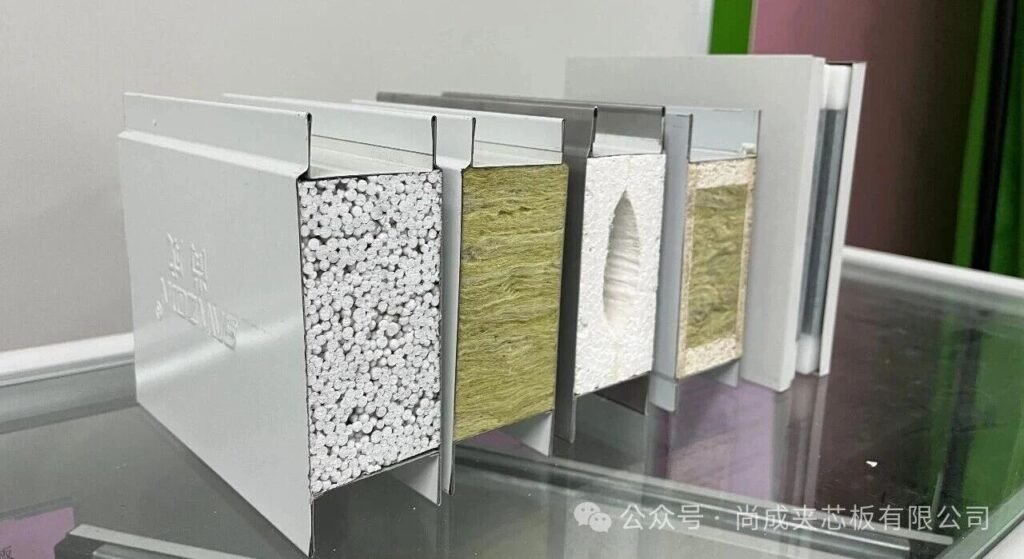
The table below summarizes the core requirements for cleanroom panels in the food, pharmaceutical, and electronics industries, allowing you to quickly grasp the key points.
| industry | Key concerns | Recommended Surface Material | Recommended Core Material | Key Performance Indicators |
| Food Industry | Moisture-proof, mildew-proof, corrosion-resistant, easy to clean, and meets hygiene standards | Food-grade stainless steel, antibacterial color steel plate | Moisture-resistant magnesium oxide board, polyurethane | Surface smoothness (Ra ≤ 0.8μm), antibacterial rate, mildew resistance grade 0 |
| Pharmaceutical Industry | Sterility assurance, material inertness, resistance to strong disinfectants, high sealing performance | 304 or 316L stainless steel | Hydrophobic rock wool, medical-grade magnesium oxide board | Sealing performance (air tightness ≤ 0.1 m³/(h·m²)), chemical corrosion resistance |
| Electronics Industry | Antistatic, dust-proof, constant temperature and humidity, vibration-resistant | Antistatic color steel plate, aluminum alloy plate | Rock wool, silicon rock plate | Surface resistivity (10^6 – 10^9 Ω), abrasion resistance (≥10000 cycles), compressive strength (≥0.5MPa) |
Food industry: Strictly prevent microbial contamination
Food production environments are often humid, making them prone to bacterial and mold growth, and they are frequently exposed to acidic and alkaline cleaning agents.
Moisture and mold prevention are the bottom line: the moisture-proof performance of the board material is crucial, and the core material must effectively prevent moisture penetration to avoid internal mold growth and food contamination.
For example, silicon rock boards/anti-mold foam core materials are recommended for use in food processing plants due to their excellent moisture-proof properties.
Easy-to-clean surface is essential: the wall surface must be smooth, flat, and seamless to allow for quick and thorough washing and disinfection, leaving no unsanitary corners.
The surface roughness Ra value should ideally not exceed 0.8μm.
Corrosion resistance extends lifespan: Commonly used chlorine-containing disinfectants and acidic cleaners can corrode the surface of the panel.
Therefore, the panel needs to have good chemical corrosion resistance.
Pharmaceutical industry: Ensuring absolute drug safety
The pharmaceutical industry has extremely high requirements for the cleanliness and sterility of its production environment, and the equipment must withstand strong disinfectants.
High-level sealing is crucial to prevent contamination: To avoid the entry of external contaminants and cross-contamination between different functional areas, the joints of the cleanroom panels require extremely high sealing.
Hand-assembled panels, due to their high precision, are better suited to the stringent sealing requirements of operating rooms, sterile preparation workshops, and other environments.
Material inertness is paramount: The surface material of the panels should possess extremely high chemical inertness, resisting the erosion of various strong acids, strong alkalis, and organic solvents, ensuring that they do not degrade or release any substances that could affect drug quality under frequent sterilization.
The core support for a sterile environment: From the substrate to the coating, the entire panel system should possess long-lasting antibacterial and bacteriostatic capabilities, providing a fundamental guarantee for a sterile environment.
Electronics Industry: Protecting Precision Products
The electronics industry, especially semiconductor and chip manufacturing, has extremely high requirements for static electricity, dust, and environmental stability.
Anti-static properties are paramount: Cleanroom panels must possess reliable anti-static capabilities, rapidly dissipating static electricity to prevent electrostatic discharge from damaging expensive precision components. This is typically achieved by adding an anti-static coating to the surface.
Dust-free operation is a basic requirement: The panels themselves should be robust and wear-resistant, with surfaces that do not easily shed particles due to friction, and effectively inhibit dust adsorption. Environmental stability is crucial: the production of some electronic components requires a constant temperature and humidity environment.
Cleanroom panels need to possess good thermal insulation properties and maintain structural stability, resisting thermal expansion and contraction due to temperature changes, thus contributing to a stable workshop environment.
After understanding the specific needs of different industries, the following suggestions can help you make better decisions:
Installation and Maintenance: Choosing modular, easy-to-install panels can significantly improve construction efficiency and reduce on-site processing and dust pollution. At the same time, understand the manufacturer’s after-sales service policy to ensure timely installation guidance and technical support.
Certification and Cost: When selecting, be sure to request official testing reports and industry certifications (such as ISO system certification) from the supplier. Don’t just compare initial prices; comprehensively consider the panel’s lifespan, maintenance costs, and ability to guarantee product quality to choose the most cost-effective solution.
Hopefully, this analysis of cleanroom panel performance requirements for different industries will provide you with clear guidance. If you can share more specific application scenarios or budget ranges, I can provide you with more targeted selection advice.