
If you’re in the construction, cold chain, or industrial building space, you’ve likely heard the term PU sandwich wall panel thrown around. But what exactly is it, how does it differ from other panels, and why is it the gold standard for cold rooms, cold storage, and temperature-controlled facilities? We’re breaking down everything you need to know, from core definitions to real-world applications, to help you understand why this material is a game-changer for insulated building projects.
- 1. What Is a Sandwich Wall Panel?
- 3. What Is PU on a Wall?
- 4. What Is the Difference Between Sandwich Panel and PU Panel?
- 5. What Is a PU Sandwich Wall Panel?
- 6.Why PU Sandwich Wall Panels Are the #1 Choice for Cold Storage & Temperature-Controlled Environments
- Common Applications of PU Sandwich Wall Panels
1. What Is a Sandwich Wall Panel?
A sandwich wall panel (also called a structural insulated panel, SIP) is a factory-engineered composite building material with a three-layer “sandwich” structure:
Two outer skin layers: High-strength, durable facings (most commonly metal like galvanized steel, aluminum, or pre-painted steel, but also non-metal options like fiberglass or plywood)
A thick, insulating core layer: A lightweight, thermal-insulating material sandwiched between the two skins, bonded permanently with industrial adhesive (typically polyurethane resin glue)
This design combines the structural rigidity of the outer skins with the superior insulation of the core, creating a single, high-performance building component that replaces traditional wall assemblies (studs, insulation, drywall, cladding) in one step.
Sandwich panels are modular, prefabricated, and ready to install, making them ideal for fast-track construction projects. They are used for walls, roofs, partitions, and floors across residential, commercial, and industrial buildings, with specialized variants engineered for extreme temperature control.
2. What Is a PU Wall Panel?
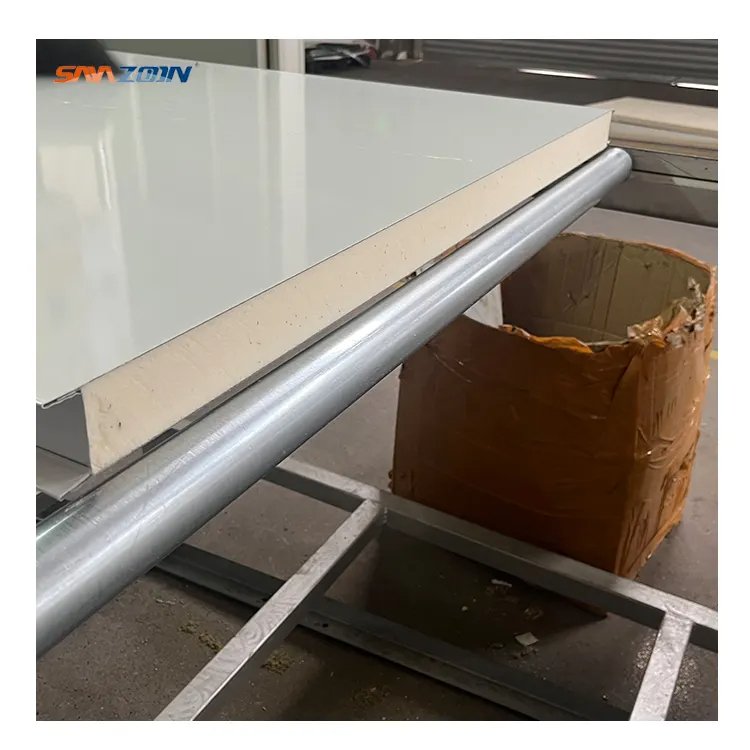
A PU wall panel is a type of wall panel where the core material is polyurethane (PU/PUR) foam — a high-performance, closed-cell insulation material.
While the term “PU wall panel” can sometimes refer to standalone PU foam boards, in the construction industry, it almost always refers to PU sandwich wall panels: the three-layer composite structure with a polyurethane foam core and rigid outer skins.
PU foam is the star of the show here: it’s a rigid, closed-cell foam made by reacting isocyanate with polyol, creating a material with exceptional thermal insulation, moisture resistance, and structural stability. When bonded to metal skins, it becomes a fully insulated, load-bearing wall system perfect for temperature-controlled spaces.
3. What Is PU on a Wall?
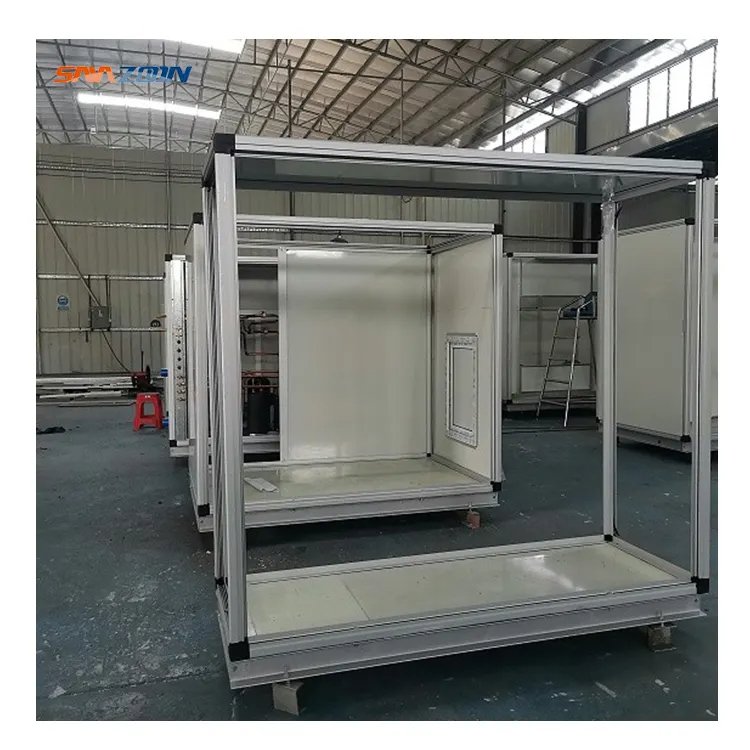
“PU on a wall” refers to the application of polyurethane-based materials to building walls for insulation, protection, or finishing. In the context of cold storage and industrial construction, this almost always means PU sandwich wall panels installed as the primary wall system.
Unlike spray-applied PU foam (which is applied on-site as a liquid and expands to fill gaps), PU on a wall in prefabricated panel form is a clean, consistent, and high-performance solution:
The PU foam core is factory-molded to exact thicknesses, ensuring uniform insulation across the entire wall
The outer metal skins protect the PU foam from damage, moisture, and environmental wear
The panel system creates a continuous, airtight thermal barrier that eliminates gaps and thermal bridges common in spray foam or traditional stud walls
For cold rooms and temperature-controlled facilities, PU on a wall via sandwich panels is the most efficient, durable, and cost-effective way to maintain consistent internal temperatures.
4. What Is the Difference Between Sandwich Panel and PU Panel?
This is one of the most common questions in the industry — and the key is understanding the relationship between the two terms:
Core Definition Clarification
Sandwich panel: A broad category of composite panels with a three-layer “skin-core-skin” structure. The core can be made of any insulating material: PU foam, EPS (expanded polystyrene), mineral wool, PIR, etc. All PU panels that follow the sandwich structure are a type of sandwich panel — but not all sandwich panels are PU panels.
PU panel: A specific type of panel where the core is polyurethane foam. When people refer to “PU panels” in construction, they almost always mean PU sandwich panels (the three-layer composite), though standalone PU foam boards also exist.
Side-by-Side Comparison
| Feature | General Sandwich Panel | PU Sandwich Panel |
|---|---|---|
| Core Material | Variable (EPS, mineral wool, PIR, PU, etc.) | Exclusively polyurethane (PU/PUR) closed-cell foam |
| Thermal Insulation | Varies widely by core (mineral wool/EPS have lower R-value) | Industry-leading: λ = 0.022 W/(m·K), R-value ~6.5 per inch of thickness |
| Moisture Resistance | Dependent on core (mineral wool absorbs moisture; EPS is prone to water intrusion) | Excellent: closed-cell structure repels water, resists mold/mildew/bacteria |
| Weight & Strength | Variable (mineral wool panels are heavier; EPS panels are less rigid) | Lightweight yet high structural rigidity, ideal for large-span buildings |
| Air Tightness | Variable (depends on core and joint design) | Exceptional: tongue-and-groove joints create a continuous air barrier |
| Best For | General construction, fire-rated walls, low-insulation needs | Cold storage, cold rooms, temperature-controlled environments, insulated buildings |
Key Takeaway
A PU sandwich panel is a subset of sandwich panels, engineered specifically for maximum thermal insulation and moisture resistance — making it the only choice for cold chain and temperature-controlled facilities.
5. What Is a PU Sandwich Wall Panel?
A PU sandwich wall panel is the specialized, wall-specific variant of PU sandwich panels, designed explicitly for vertical wall applications in cold storage, cold rooms, and temperature-controlled buildings.
Core Structure (As Defined by Industry Standards)
As shown in the diagram below, every PU sandwich wall panel is a factory-pre-engineered system with three permanently bonded layers:
Outer & Inner Skin Layers: High-strength, corrosion-resistant facings, most commonly:
PPGI (pre-painted galvanized iron)
PPGL (pre-painted galvalume iron)
Galvanized steel sheets
Stainless steel (for food-safe cold rooms)
Aluminum plates
These skins provide structural rigidity, weather resistance, and a finished exterior/interior surface.
Polyurethane (PU/PUR) Insulation Core: A rigid, closed-cell PU foam core (density 32–60 kg/m³) that acts as the thermal barrier. It has a thermal conductivity of just 0.022–0.024 W/(m·K), far outperforming EPS, mineral wool, and other common insulators.
Industrial Adhesive Bond: Polyurethane resin glue that permanently bonds the skins to the core, creating a single, monolithic panel that eliminates delamination and thermal bridges.
Key Design Features for Cold Storage
Tongue-and-groove joint system: Sealed with white/transparent sealant to create an airtight, watertight connection between panels, eliminating air infiltration and heat leakage
Custom thicknesses: 40mm to 200mm (thicker cores for extreme cold rooms, e.g., -25°C freezers)
Hidden/secret fixings: Boltless, hidden screw designs for a seamless, insulated wall surface with no thermal bridges
Food-safe coatings: PVC, PVDF, or food-safe finishes for cold rooms handling food, pharmaceuticals, or sensitive goods
6.Why PU Sandwich Wall Panels Are the #1 Choice for Cold Storage & Temperature-Controlled Environments
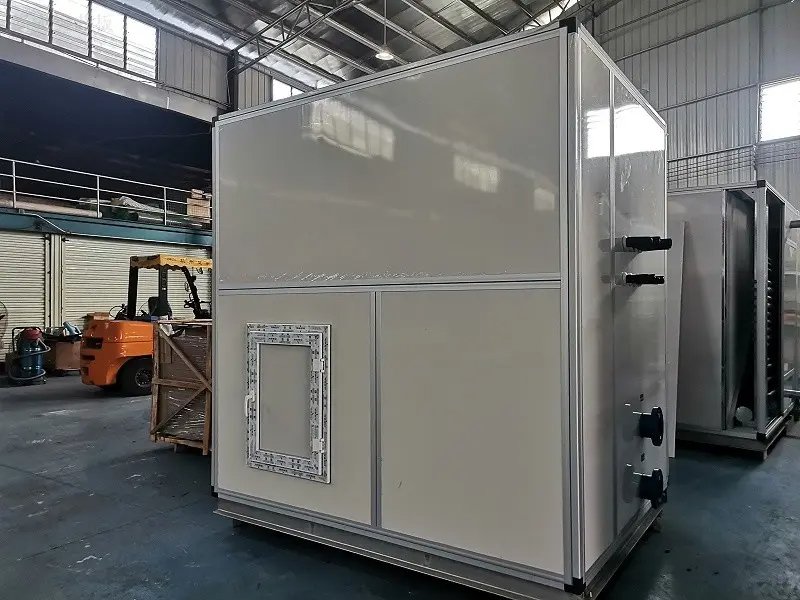
PU sandwich wall panels are the global standard for cold rooms, cold storage, and temperature-controlled facilities for one simple reason: they deliver unmatched performance in the exact conditions these spaces require.
1. Unrivaled Thermal Insulation
The closed-cell PU foam core has a thermal conductivity (λ) of just 0.022 W/(m·K) — the lowest of any common building insulation material. This means:
Minimal heat transfer through walls, roofs, and floors
Consistent internal temperatures (critical for cold chain, food storage, and pharmaceutical facilities)
Drastically reduced energy costs for heating/cooling (up to 50% lower than traditional wall systems)
R-values up to 7.14 per inch, with thicker panels delivering even higher thermal resistance
2. Superior Moisture & Hygiene Resistance
Cold rooms are high-humidity environments, and moisture intrusion is a leading cause of equipment failure, mold growth, and structural damage. PU sandwich panels solve this:
Closed-cell PU foam is 100% water-repellent, with zero moisture absorption
Resists mold, mildew, bacteria, and corrosion, making it food-safe and compliant with health regulations
Airtight joint system prevents condensation and water vapor ingress into the wall assembly
3. Fast, Cost-Effective Installation
Prefabricated PU sandwich wall panels are ready to install straight from the factory, cutting construction time by 50–70% compared to traditional stud-and-insulation walls:
No on-site cutting, framing, or insulation installation required
Modular design fits any building size, from small walk-in cold rooms to large-scale cold storage warehouses
Lower labor costs and faster project completion, reducing time-to-operation for cold chain businesses
4. Lightweight Yet High Structural Rigidity
PU sandwich panels combine the strength of metal skins with the lightweight PU core, creating a load-bearing wall system that:
Supports large, open-span cold storage buildings without heavy internal framing
Reduces the structural load on the building foundation, lowering overall construction costs
Resists wind, seismic activity, and daily wear-and-tear in industrial environments
5. Long-Term Durability & Low Maintenance
PU sandwich wall panels are built to last 25+ years in cold storage environments, with minimal maintenance:
Corrosion-resistant metal skins and protective coatings (PE, PVDF, PVC) prevent rust and degradation
The monolithic panel structure eliminates gaps, drafts, and maintenance issues common in traditional walls
Easy to clean and sanitize, meeting strict food safety and pharmaceutical standards
Common Applications of PU Sandwich Wall Panels
PU sandwich wall panels are the go-to solution for any space requiring strict temperature control. The most common use cases include:
1. Cold Chain & Cold Storage Facilities
Cold rooms, walk-in refrigerators, and freezers
Cold storage warehouses and distribution centers
Ripening chambers, CA (controlled atmosphere) chambers for fruit storage
Negative-temperature cold rooms for frozen food storage
2. Temperature-Controlled Buildings
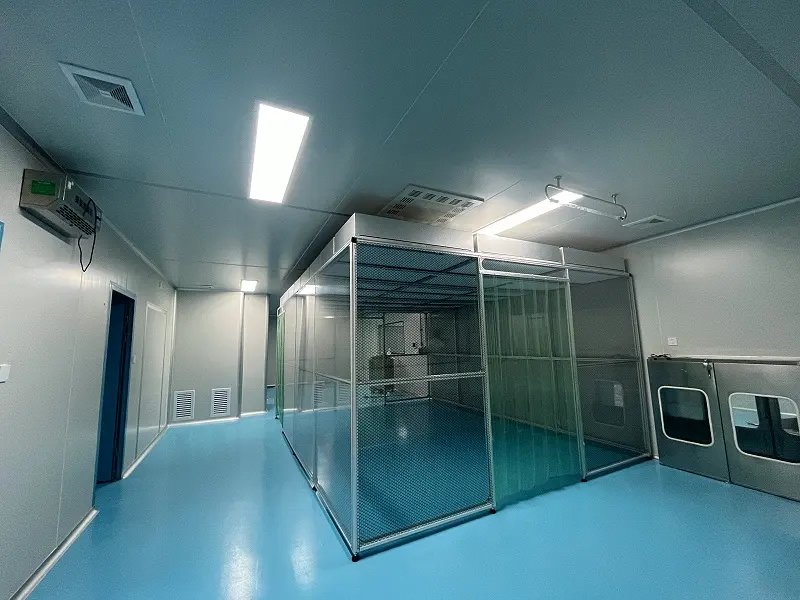
Clean rooms, pharmaceutical storage facilities, and laboratories
Food processing plants, breweries, and dairy facilities
Supermarket back-of-house cold storage
Greenhouses and agricultural climate-controlled buildings
3. Prefabricated & Industrial Buildings
Prefabricated cold storage buildings, portable cold rooms
Insulated truck bodies, refrigerated vans, and reefer trailers
RVs, caravans, and mobile cold storage units
Agricultural buildings (livestock farms, poultry sheds, crop storage)
4. Commercial & Residential Construction
Insulated exterior walls, partitions, and ceilings for energy-efficient buildings
Roof panels for insulated warehouses and industrial facilities
Floor panels for cold storage and temperature-controlled spaces
How to Choose the Right PU Sandwich Wall Panel for Your Project
When selecting PU sandwich wall panels for a cold storage or temperature-controlled project, consider these key factors:
Core Thickness: Match thickness to your required temperature:
40–80mm: Cool rooms (0–10°C)
100–150mm: Medium cold rooms (-10 to 0°C)
150–200mm: Deep freezers (-25°C and below)
Skin Material: Choose stainless steel for food-safe cold rooms, PPGI for general industrial use, and aluminum for lightweight applications.
Joint System: Opt for tongue-and-groove with sealant for maximum airtightness, and hidden fixings for a seamless, thermal-bridge-free wall.
Coating: Select food-safe PVC for cold rooms handling food, or PVDF for long-term outdoor durability.
Fire Rating: For commercial buildings, choose fire-retardant PU core panels to meet local building codes.
Final Thoughts
PU sandwich wall panels are not just a building material — they’re a complete, high-performance solution for cold storage and temperature-controlled environments. By combining industry-leading thermal insulation, moisture resistance, and structural strength in a prefabricated, easy-to-install panel, they deliver unmatched energy efficiency, cost savings, and durability for cold chain businesses, construction companies, and facility owners.
Whether you’re building a small walk-in cold room or a large-scale cold storage warehouse, PU sandwich wall panels are the only choice that balances performance, cost, and long-term reliability.